Okay, let's dive deep into the shield-slinging world of Marvel Legends. Preparing to chronicle the meticulous evolution of Captain America in plastic form, from the early days to the cutting edge, with a journalist's eye and a collector's heart.
Captain America's Evolution in Marvel Legends Figures Unveiled
For over two decades, Marvel Legends has been the gold standard for articulate, collector-friendly action figures. But few characters embody the line's own growth and transformation quite like Captain America. From humble beginnings with limited articulation and often questionable sculpts to the hyper-detailed, photo-real masterpieces we see today, tracking Captain America's evolution in Marvel Legends figures isn't just a trip down memory lane; it’s a masterclass in action figure engineering, artistic interpretation, and the enduring power of a symbol.
Whether you're a seasoned collector with shelves groaning under the weight of plastic heroes or a newcomer just starting your patriotic journey, understanding this evolution helps you appreciate the craft, identify the gems, and make informed choices for your own collection. It’s about more than just plastic; it’s about tracing the changing face of a legend, through the eyes of the sculptors and designers who brought him to life.
At a Glance: Cap's ML Journey
- Early Days (Toy Biz Era): Often unique, sometimes clunky, with varying quality and articulation. A lot of character, but less consistency.
- Hasbro's Takeover (Early Hasbro): A smoother transition, focusing on improved articulation and scale, but sometimes criticized for thinner plastic and less dynamic sculpts initially.
- The Modern Golden Age (Post-2014): Significant leaps in sculpt detail, paint application (Photo Real technology), and articulation schemes, driven by MCU success and collector feedback.
- MCU vs. Comic Figures: Two distinct yet equally vital branches of Cap's representation, each with unique design challenges and triumphs.
- Variations & Exclusives: Cap is a prime candidate for repaints, retools, and special editions, reflecting his many looks and legacies.
- What to Look For: Articulation improvements, sculpt fidelity, paint apps, and character-specific accessories are key indicators of progress.
The Genesis: Captain America in the Toy Biz Era (2002-2006)
Before Hasbro took the reins, Toy Biz laid the foundation for Marvel Legends. Their approach was often experimental, daring, and sometimes, wonderfully bizarre. For Captain America, this era gifted us figures that, while rough around the edges by today's standards, often possessed a unique charm and ambition.
The very first Marvel Legends Captain America, released in Series 1 (2002), was an immediate statement. This wasn't your average five-points-of-articulation figure. Featuring over 30 points of articulation, including hinged fingers and individual toe articulation (a rarity even today!), it aimed for maximum poseability. The sculpt was a product of its time – muscular, heroic, but with a softer, less defined facial expression. It established Cap as a flagship character, setting a precedent for the detailed treatment he’d receive for years to come.
Later Toy Biz iterations, like the Series 8 (2005) "Modern Armor" Captain America or the Series 15 (2006) "Modok Series" Captain America, showcased the company's willingness to experiment with different looks and uniform interpretations. The Modok Series Cap, in particular, improved on the classic look, offering a leaner, more agile sculpt with better proportions. These figures often came with elaborate bases or props, adding to their display value, even if the paint applications could be inconsistent and the joints sometimes fragile.
The Toy Biz era figures are nostalgic treasures. They might lack the crispness of modern sculpts or the advanced engineering, but they represent the bold, formative years of Marvel Legends. Collectors often seek them out for their historical significance and the sheer variety of designs they brought to the table. They’re a reminder of how far the line has come, and the ambition that started it all. If you're looking to dive deep into collecting the icon, you'll definitely want to Explore Marvel Legends Captain America figures from every era.
The Hasbro Transition: Finding Its Footing (2007-2012)
When Hasbro acquired the Marvel Legends license in 2007, there was a noticeable shift in direction. The initial waves, often referred to as the "Anniversary" or "Return" waves, aimed to refine the existing formula. For Captain America, this meant figures that generally had improved articulation joints (less breakage) and a more consistent scale across the line.
The "Face-Off" Two-Pack Captain America (2007), often paired with the Red Skull, became an early benchmark for Hasbro’s take on the classic costume. It was a solid figure, offering a more streamlined aesthetic than some of its Toy Biz predecessors. However, some collectors noted a slightly "thinner" feel to the plastic and less intricate sculpts compared to the best of Toy Biz. This was Hasbro's challenge: maintaining the innovation while streamlining production.
The first major cinematic influence also began to appear. While not fully integrated into the main Legends line at first, figures from early MCU films like Captain America: The First Avenger started hinting at the dual path of comic and movie figures. These early film figures, though sometimes simpler in sculpt, laid the groundwork for the massive influx of MCU figures to come.
This period was a necessary evolution. Hasbro was learning the ropes, standardizing production, and preparing for the massive surge in Marvel's popularity that was just around the corner. While these figures might not always be the most sought-after by today's standards, they represent a crucial bridge in the line's history.
The Modern Renaissance: Hasbro's Golden Age (2013-Present)
The period from roughly 2013 onwards, coinciding with the peak of the Marvel Cinematic Universe and a renewed focus on the Legends line, marks Captain America's true glow-up. This era has seen Hasbro push the boundaries of action figure technology, resulting in figures that are often breathtakingly accurate and supremely poseable.
The Articulation Revolution
One of the most significant advancements has been in articulation. Modern Captain America figures boast:
- Improved Double-Jointed Knees & Elbows: Deeper bends, allowing for dynamic action poses like shield throws and running stances.
- Butterfly Joints: Found at the shoulders, these allow Cap to bring his shield-holding arm further across his body, creating more realistic blocking and striking poses.
- Rocker Ankles: Essential for maintaining balance in wide stances and dynamic jumps.
- Pinless Joints: Increasingly common, these eliminate visible pins at the elbows and knees, resulting in a cleaner, more aesthetically pleasing look.
Take, for instance, the 80th Anniversary Captain America (2019). This figure is often cited as one of the best comic-inspired Cap figures ever made. It perfectly blends classic design with modern articulation, featuring butterfly joints, excellent range of motion, and a fantastic sculpt. It truly allows collectors to recreate iconic comic book covers and poses with unparalleled fidelity. To deepen your appreciation for how far the line has come, you can always Explore Marvel Legends Captain America figures from this incredible period.
Sculpting & Photo Real Technology
Hasbro's investment in digital sculpting and the revolutionary Photo Real technology has transformed facial likenesses. This digital printing process applies incredibly detailed, layered paint to capture the subtle nuances of human faces, bringing an unprecedented level of realism to both comic and MCU figures.
- MCU Figures: Actors like Chris Evans as Steve Rogers have been captured with astounding accuracy. Figures like the Infinity Saga Captain America (from Endgame) or the Marvel Studios: The First Ten Years Captain America (from Civil War) perfectly exemplify this, with multiple swappable heads capturing different expressions. These aren't just toys; they're miniature movie props.
- Comic Figures: While not needing Photo Real for actor likeness, the technology allows for incredibly crisp details on masks, intricate uniform lines, and expressive battle damage. The evolution here means comic figures now feel less generic and more like direct translations of specific artist styles.
The Power of Accessories
Modern Cap figures come packed with accessories that enhance play and display:
- Multiple Shields: From classic round shields to vibranium gauntlets, damaged shields, or even proto-type triangular shields.
- Alternate Heads: Unmasked Steve Rogers, battle-damaged masks, or different expressions.
- Interchangeable Hands: Fist, open-palm, shield-gripping, salute hands.
- Effect Pieces: Energy blasts or leaping effects, adding dynamic visual flair.
This attention to detail in accessories vastly increases the value and versatility of each figure, allowing collectors to customize their displays.
Dual Paths: Comic Accuracy vs. MCU Adaptations
One of the fascinating aspects of Captain America's evolution in Marvel Legends is how the line expertly navigates two distinct yet equally important artistic directions: classic comic book fidelity and cinematic realism.
The Comic Book Crusader
For purists, the comic-accurate Captain America figures are paramount. These figures draw inspiration from decades of comic book art, translating iconic artists' interpretations into three-dimensional form. Hasbro has offered figures based on:
- Classic Silver Age/Bronze Age designs: Bold colors, simpler lines, often on a leaner body mold.
- Modern Comic designs: More intricate detailing, sometimes a bulkier build, reflecting artists like John Cassaday or Steve Epting.
- Specific Story Arcs: Figures inspired by Secret Wars, Civil War (comic version), or other pivotal storylines.
The challenge here is to create a figure that feels universally "Captain America" while also subtly reflecting specific artistic styles without alienating fans. The Retro Cardback Captain America (2020) is a fantastic example, evoking a classic toy feel while still benefiting from modern articulation. When you're ready to add more heroes and villains to your collection, remember to Explore Marvel Legends Captain America and other iconic characters.
The Cinematic Icon
The Marvel Cinematic Universe has propelled Captain America to unprecedented global fame. Marvel Legends figures based on the MCU iterations are some of the most popular and highly anticipated releases. These figures aim for screen-accurate detail, from the stitching on his uniforms to the textures of his shield and the precise likeness of Chris Evans.
The sheer variety of MCU Cap figures is astounding:
- Different Uniforms: From his "Star Spangled Man" outfit from The First Avenger to the more tactical "Stealth Suit" from Winter Soldier, the iconic "AOU/Civil War" look, and the ultimate "Endgame" suit (with Mjolnir!).
- Battle Damage & Variants: Figures depicting his shield damaged or his uniform torn, offering a snapshot of specific movie moments.
- Alternate Character Roles: Even figures like Sam Wilson Captain America and John Walker Captain America from The Falcon and the Winter Soldier TV series demonstrate the character's legacy and evolution within the cinematic universe.
The success of these MCU figures often drives the innovation in the entire line, pushing Hasbro to refine sculpting techniques and paint applications, which then trickle down to benefit comic-based figures as well. The meticulous detail in these figures is a testament to the growth and refinement of the Marvel Legends line. You can compare the cinematic iterations to the comic figures when you Explore Marvel Legends Captain America and make your own definitive choice.
Understanding Variants, Exclusives, and Build-A-Figures
Captain America is a character ripe for variations, given his many costumes, patriotic themes, and iconic status.
The Allure of Exclusives
Retailer exclusives play a significant role in Captain America's Marvel Legends history. These can range from simple repaints (e.g., a "comic accurate" red, white, and blue repaint of an existing mold) to entirely new sculpts or significant retools. Exclusive figures often represent:
- Unique Uniforms: Such as the Walmart exclusive "Winter Soldier" movie Cap with its more muted color scheme.
- Specific Storyline Looks: Like the Walgreens exclusive "Infamous Iron Man" Captain America (Sam Wilson).
- Deluxe Releases: Sometimes offering more accessories or larger scale, like the Target exclusive "Worthy Captain America" from Avengers: Endgame.
These exclusives can sometimes be harder to track down, adding to their collector appeal and aftermarket value.
Build-A-Figures (BAFs) & Box Sets
While Captain America figures themselves are rarely BAF pieces, they are often the main attraction in waves that feature desirable BAFs. This encourages collectors to buy the whole wave to complete a larger figure, inadvertently adding more Caps to their collection.
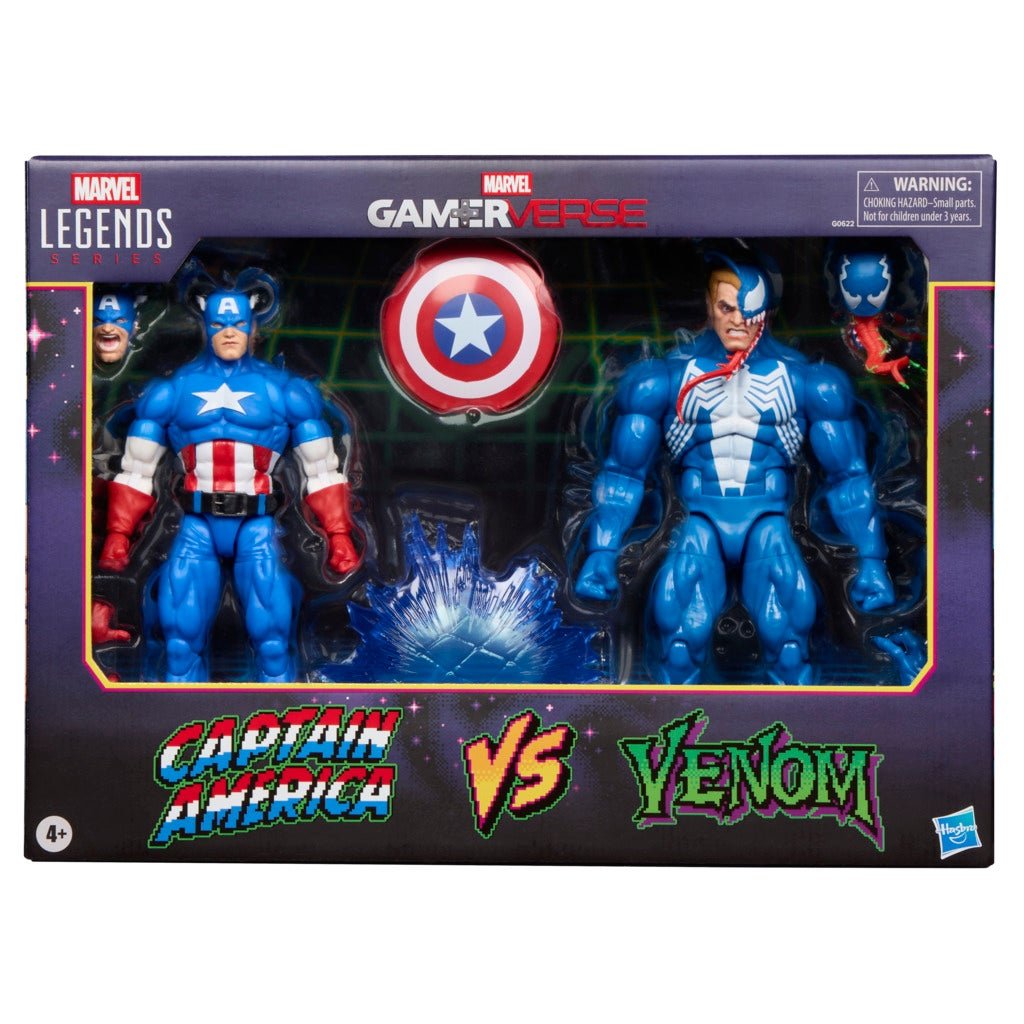
Furthermore, Captain America frequently anchors multi-packs and deluxe box sets. The "80th Anniversary Captain America and Peggy Carter" two-pack or the "Avengers: Endgame S.H.I.E.L.D. vs. Hydra" set featuring Cap are prime examples. These sets often include unique accessories or head sculpts not available elsewhere, making them essential for completists.
The "Stealth Repaint" Phenomenon
Hasbro has been clever with re-using molds, and Captain America is no stranger to this. Often, a well-received body mold will be repainted or slightly retooled to represent a different uniform or even a different character (like USAgent or Commander Rogers). While sometimes criticized, these repaints can offer an affordable way to expand a collection with diverse looks for the character, often providing essential variants like the "Nomad" Cap or the "Secret Empire" Cap from recent comic storylines. Each new release, whether a repaint or a fresh sculpt, contributes to the rich tapestry that is Explore Marvel Legends Captain America.
What Makes a "Great" Captain America Figure Today?
With such a vast array of figures, how do you judge the best of the best? It boils down to a few key criteria that have evolved alongside the line itself:
- Sculpt Fidelity: Does it accurately represent the source material, whether comic or movie? Is the head sculpt convincing?
- Articulation: Does it allow for a wide range of natural, dynamic poses without compromising the sculpt? Pinless joints and butterfly joints are strong indicators of a modern, well-engineered figure.
- Paint Application: Is it clean, crisp, and accurately applied? Are there subtle shading or weathering effects where appropriate? Photo Real technology for faces is a huge plus.
- Accessories: Does it come with essential character-specific items like multiple shields, alternate heads, and hands? The more display options, the better.
- Durability & Engineering: Are the joints sturdy? Does the figure hold a pose? Is the plastic quality robust?
- Value for Money: Does the overall package (figure, accessories, quality) justify the price point?
For many, the 80th Anniversary Captain America stands as a benchmark for comic Cap, while the Infinity Saga Endgame Captain America with Mjolnir often takes the crown for MCU Cap. These figures encapsulate the best of what Marvel Legends has become. Collectors actively seek out figures that excel in these areas, making these "definitive" versions highly prized.
Common Questions and Misconceptions
"Are the older Toy Biz figures worth collecting?"
Absolutely, but for different reasons. They offer unique sculpts, often more dynamic accessories (like bases), and historical value. However, expect less consistent quality, older articulation schemes, and potentially fragile joints compared to modern figures. They're great for nostalgia and completing a historical collection.
"Why are some Captain America figures so expensive on the aftermarket?"
Exclusivity, age, demand, and character popularity drive prices. Limited-run exclusives, figures from popular waves that are now out of print, or "grail" figures (like the original Toy Biz Series 1 Cap in pristine condition) can command high prices. Also, figures from pivotal MCU moments (e.g., Endgame Cap with Mjolnir) often see increased value.
"Is there a definitive 'best' Captain America figure?"
This is subjective! For comic accuracy and poseability, many collectors point to the 80th Anniversary Cap. For MCU accuracy, the Infinity Saga Endgame Cap (especially the one with Mjolnir) is a strong contender. The "best" often depends on whether you prefer comic or movie aesthetics, and what era of Cap you're fond of.
"Do Marvel Legends figures scale well with other lines?"
Generally, Marvel Legends adheres to a 6-inch scale. This means they typically scale well with other 1:12 scale lines, though there can be minor variations between companies or even within the Legends line itself (e.g., some characters might be slightly taller or shorter based on their comic appearance). For example, Cap generally stands at a heroic height consistent with his portrayal.
"What does 'Photo Real' mean?"
Photo Real is a digital printing technology used by Hasbro (and other companies) to apply incredibly detailed paint applications, particularly to faces. It allows for lifelike skin tones, subtle eye detailing, and beard stubble that would be impossible with traditional paint masks, making actor likenesses much more accurate.
The Continuing Saga: What's Next for Captain America in Marvel Legends?
The evolution of Captain America in Marvel Legends is an ongoing story. As new comic storylines unfold and the MCU continues to expand with characters like Sam Wilson and Joaquin Torres taking on the shield, we can expect Hasbro to keep pace.
We'll likely see:
- New MCU interpretations: As Captain America: Brave New World approaches, new figures will undoubtedly emerge, reflecting cinematic costume changes and character developments.
- Further comic accuracy: Hasbro constantly revisits classic characters, often improving on older molds with new technology and articulation. A "perfect" Silver Age Cap might still be on the horizon.
- Expanding the legacy: More figures of characters who have wielded the shield, such as Isaiah Bradley or Dani Ramirez.
- Technological refinements: Expect even more seamless articulation, advanced paint applications, and potentially even more innovative accessory choices.
The journey of Captain America through Marvel Legends figures mirrors the hero himself: ever-evolving, always striving for perfection, and enduring as a symbol of aspiration and quality within the collecting world. For any serious collector, or even just a fan of the Sentinel of Liberty, diving into this rich history is a rewarding experience, showcasing the incredible strides in action figure design over two decades. Whether you're hunting for a classic Toy Biz gem or the latest MCU masterpiece, the hunt is half the fun, and the display is the ultimate reward. There's always something new to discover when you Explore Marvel Legends Captain America.
Your Next Steps: Building Your Own Cap Collection
Ready to start or expand your own Captain America collection? Here’s some actionable advice:
- Define Your Focus: Do you want comic-accurate Caps, MCU versions, or both? Are you interested in specific eras (e.g., Golden Age, Modern Age)? Knowing your preference will guide your purchases.
- Research Before You Buy: Use resources like Legendsverse.com and ActionFigure411.com (as referenced earlier) to see checklists, images, and figure details. These sites are invaluable for identifying specific figures and their accessories.
- Prioritize Key Figures: Start with the "definitive" versions for your chosen focus. For instance, if you love comic Cap, aim for the 80th Anniversary or a strong Retro Cardback version.
- Set a Budget: Marvel Legends can be addictive. Decide how much you're willing to spend per figure or per month.
- Shop Smart: Check online retailers, specialty toy stores, and local comic shops. For older figures, explore eBay, Facebook collector groups, or dedicated action figure forums, but always be wary of bootlegs or inflated prices.
- Don't Fear the Aftermarket (with caution): For older or exclusive figures, the aftermarket is often your only option. Compare prices across multiple sellers and check seller reviews.
- Display with Pride: Once you have your figures, invest in some simple display stands or risers to show them off in dynamic poses. Good lighting always helps.
The evolution of Captain America in Marvel Legends is a testament to the growth of the action figure industry and the enduring appeal of one of Marvel's greatest heroes. Each figure tells a story, not just of Captain America, but of the craftsmanship and passion behind the plastic. Happy collecting!